

articles
When Seconds Matter: How Seminole County Empowers Telecommunicators with Smarter Technology
Apr 21, 2026
In this article
Share
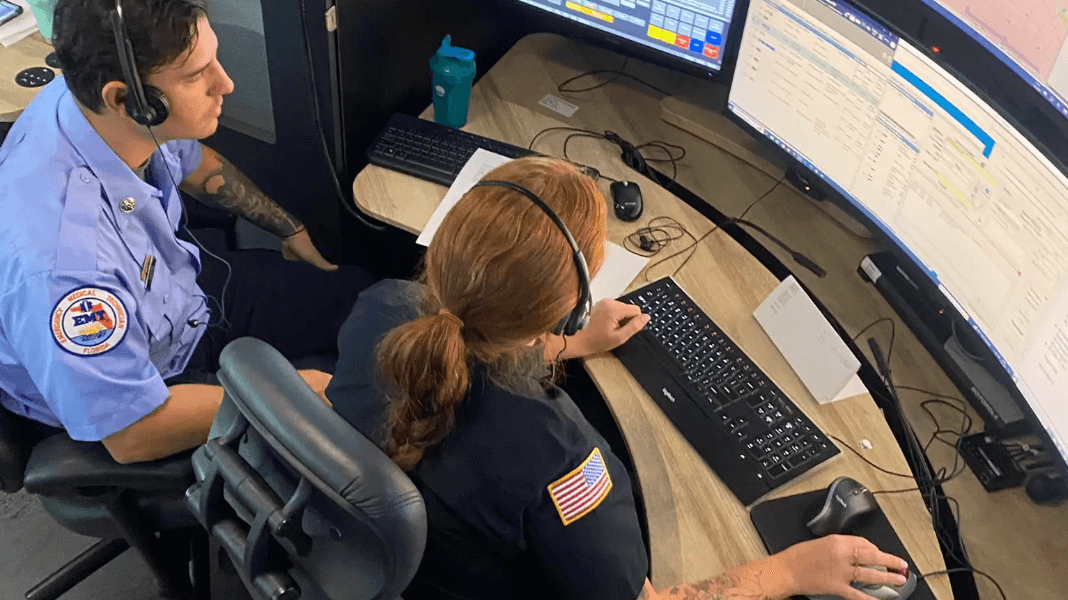
When someone dials 911, the first voice they hear isn’t a firefighter or paramedic, it’s a telecommunicator. Calm under pressure, highly trained, and supported by sophisticated technology, public safety dispatchers serve as the critical link between the public and emergency response. During National Public Safety Telecommunicators Week (April 12–19), CentralSquare is shining a light on the essential role these professionals play and how modern technology helps them do their jobs better through the lens of Seminole County in Florida.
Just north of Orlando, Seminole County’s emergency communications center serves approximately 500,000 residents, coordinating responses across municipalities and supporting more than 400 responders in the field. At the center of that operation sits Keri Troyano, Emergency Communications Program Manager for the Seminole County Fire Department, who oversees the people, processes, and technology that keep the county’s emergency response running smoothly.
“Dispatchers aren’t just answering phones,” Troyano explains.
“They’re gathering critical information, assessing incidents in real time, and making sure the closest and most appropriate units are sent to help.”
Technology Built for Real-Time Decision Making
To support that mission, Seminole County relies on CentralSquare Enterprise CAD, along with its Mobile + Field Ops solutions. These technologies allow telecommunicators to quickly input caller data, leverage turn‑by‑turn routing, and automatically identify the fastest and most effective unit for each situation. When road closures or hazards arise, dispatchers can immediately update routing recommendations, ensuring response teams aren’t delayed when seconds matter most.
Because CentralSquare owns the full public safety stack, dispatchers aren’t working across disconnected systems. Information flows seamlessly from call intake to field response, giving telecommunicators a more complete, real-time picture of every incident. This level of visibility supports faster decision-making, clearer situational awareness, and more precise response coordination.
But technology alone isn’t enough. Seminole County has also invested heavily in training and workforce development, addressing one of the biggest challenges facing emergency communications centers nationwide. New hires, even those with no prior dispatch experience, begin with a six‑week, in‑house training academy, where they learn CAD systems, geography, policies and procedures. From there, they work alongside certified training officers for an additional six to eight weeks, gaining hands-on experience before operating independently.
“The transition has been remarkably smooth,” Troyano said.
“Our dispatchers are able to learn the technology quickly and confidently, which helps them focus on what matters most – serving the community.”
Impact When Every Second Counts
For Seminole County residents, the impact is clear: faster response times, better coordination, and reassurance that every emergency call is handled with precision and care.
As National Public Safety Telecommunicators Week recognizes the dedication of these behind‑the‑scenes professionals, Seminole County’s approach shows what’s possible when telecommunicators are equipped with the right technology and training, giving them the clarity and confidence to make critical decisions when every second counts.
This website uses cookies to ensure you get the best experience on our website. By continuing on our website, you expressly consent to our use of cookies, Privacy Policy and Terms of Use. To find out more about how we use cookies, please see our Privacy Policy.