

articles
How Two Mountain West Agencies Are Using Technology to Stay Ahead of an Escalating Wildfire Threat
Apr 02, 2026
In this article
Share
From Montana’s driest winter on record to Colorado’s year-round fire environment, CentralSquare customers share how CAD automation, interagency connectivity, and field-based operations are changing wildfire preparedness.
The 2026 Wildfire Outlook: Why This Year Is Different
The numbers paint an urgent picture. More than 40 percent of the United States is experiencing drought heading into spring 2026. Montana has seen one of its driest winters on record, with snowpack across the state sitting below the median average. In Colorado’s Four Corners region, some areas are reporting record-low snowpack and long-term drought. And nationally, the National Interagency Fire Center tallied 77,850 wildfires and 5 million acres burned in 2025, with analysts warning that 2026 conditions are trending worse.
These statistics resemble on-the-ground reality for the dispatchers, firefighters, and incident commanders working in the Mountain West. They’re the conditions that dictate whether a routine grass fire stays at five acres or explodes at a larger scale in a matter of minutes. Agencies across the Mountain West are turning to technology to stay ahead of these conditions. With CentralSquare’s platform, they’re able to automate response, improve coordination, and make faster decisions when every second counts.
We spoke with leaders at two CentralSquare customer agencies, Cascade County Emergency Communications in Great Falls, Montana, and South Metro Fire Rescue in the Denver metro area, to learn how they’re preparing for what could be one of the most challenging wildfire seasons in recent memory.
Cascade County, Montana: Pre-Built Run Cards and 90-Second Dispatch
In Cascade County, wildfire preparedness starts long before the first column of smoke rises over the prairie. Brandon Skogen, PSCO Supervisor, Cascade County Emergency Communications Center in Great Falls, has built an automated dispatch framework using CentralSquare’s CAD system that determines exactly which departments and mutual aid resources respond at each alarm level.
The value of that preparation was tested during the Gibson Flats fire, when a small grass fire intentionally set during a high-wind event rapidly consumed more than 20 homes outside Great Falls. The incident required coordination across rural fire departments, Great Falls Fire Rescue, the Montana National Guard, and Malmstrom Air Force Base.
“When those first units got on scene and gave the size-up, we knew we had a situation where we were going to need a lot of resources. Having this already pre-built into our system, with just a click of a button, it tells us who we’re sending next. On any kind of emergency, seconds count.”
– Brandon Skogen, PSCO Supervisor, City of Great Falls/Cascade County Emergency Communications Center
The results speak to the system’s impact: approximately 85 percent of the center’s emergency calls are dispatched within 90 seconds or less.
Cascade County collaborates with two neighboring counties, Chouteau and Lewis and Clark, who also run CentralSquare CAD and Vertex NG911 call handling platform. The three centers share configurations and troubleshoot technical challenges together, creating a regional ecosystem of preparedness.
Run card updates follow a disciplined schedule: changes are accepted between November and March so that configurations remain locked and stable during fire season. If a unit is unavailable (like a lost tender or retired brush truck), substitutions are handled case by case, but the goal is simple: don’t change the plan mid-incident.
South Metro Fire Rescue, Colorado: A Year-Round, Multi-Layered Approach
In Colorado, the concept of a defined wildfire “season” has become obsolete. The Marshall Fire, one of the most destructive in state history, ignited near New Year’s Eve 2021 and destroyed three neighborhoods. Tyler March, Emergency Communications Director, South Metro Fire Rescue, puts it simply: wildfire preparedness is now a 365-day operation.
South Metro’s approach layers multiple technologies and operational protocols:
CAD-to-CAD Interoperability via the Unify Hub
South Metro and West Metro are connected through CentralSquare’s Unify CAD-to-CAD hub, providing real-time GPS tracking across agency boundaries and enables automated dispatch of the closest appropriate units. This level of coordination allows the agencies to operate as one connected system rather than isolated departments. The agencies share units through the hub daily. When South Metro needs help, one action dispatches West Metro crews, who switch channels while responding.
“People don’t care what it says on the truck, they just want somebody there fast. With Unify, you can look at it holistically as one district: where is the need and how do we accommodate that need based on what’s available?” – Tyler March, Emergency Communications Director, South Metro Fire Rescue
Field-Based CAD Operations
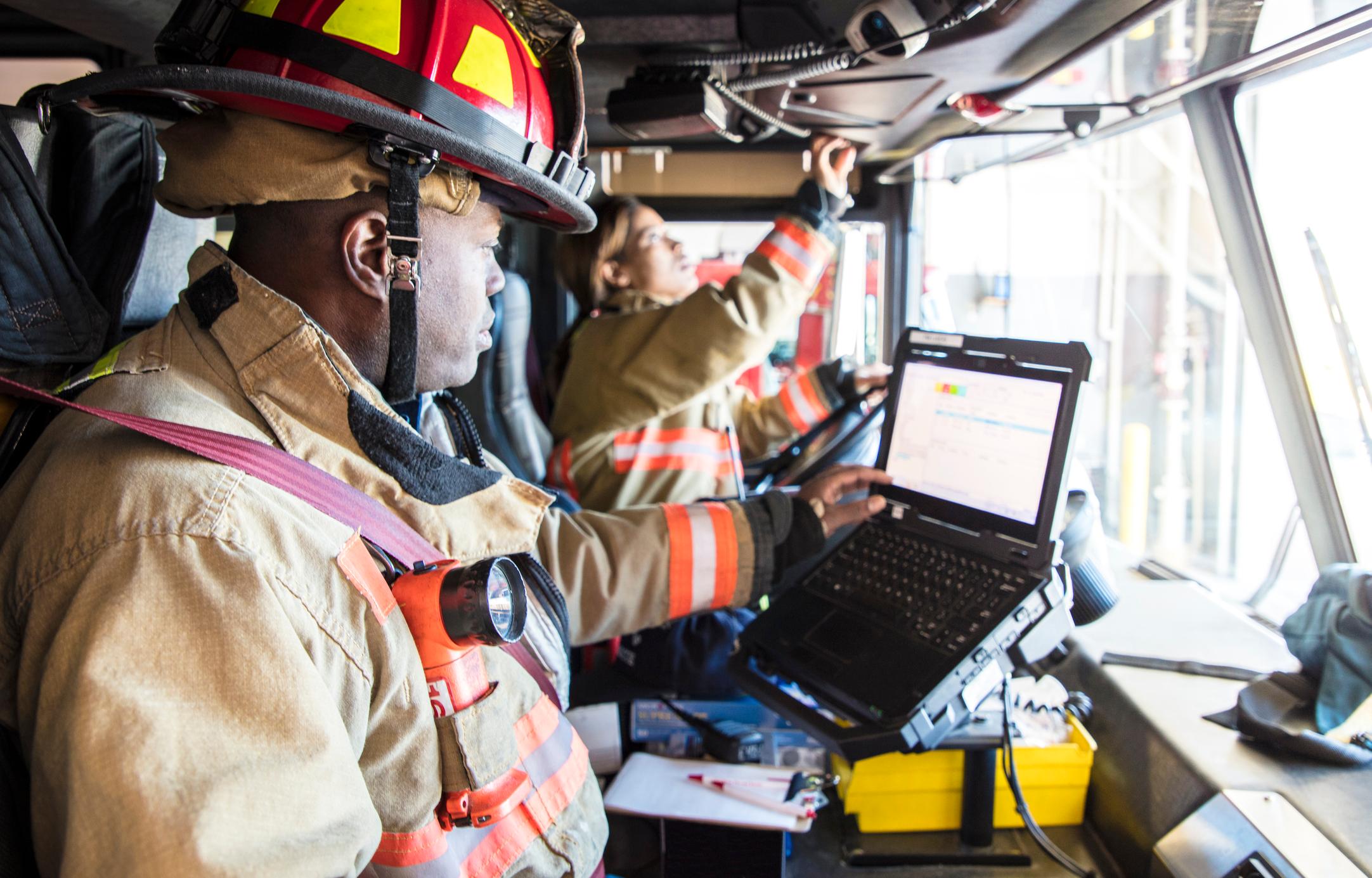
South Metro’s incident dispatch unit deploys CentralSquare’s Enterprise CAD directly to the field. Incident commanders can request and dispatch resources from the scene without waiting for radio traffic to clear. The communication center is free to handle everyday call volume while the incident is managed on-site.
Detection, Video and Mapping Tools
Through a state partnership with Xcel Energy, smoke detection cameras on utility towers automatically alert dispatchers with coordinates and live video. Dispatchers can also access live caller video via text link, helping crews assess conditions and right-size response in real time. In the field, infrared-equipped drones map fire perimeters and identify hotspots during mop-up, reducing time on scene. These data points are layered with GIS tools to track fire growth and identify threatened infrastructure.
Common Threads: What These Agencies Teach Us About Preparedness
These capabilities are made possible through platforms like CentralSquare, which enable agencies to automate, connect, and extend operations beyond traditional limits. Despite operating in different states with different terrain and threat profiles, Cascade County and South Metro share several core principles that any agency can learn from:
- Automate the predictable. Pre-built run cards and automated dispatch protocols remove decision-making burden during the most stressful moments of an incident, when seconds determine whether a fire stays manageable or spirals.
- Build interagency connectivity before you need it. Whether it’s Cascade County sharing CAD configurations with neighboring counties or South Metro’s daily unit-sharing through the Unify hub, the time to build mutual aid relationships is before the smoke rises.
- Push technology to the field. South Metro’s field-based CAD operations alleviate the communication center and accelerate resource requests. Cascade County’s neighboring departments use drones for real-time incident mapping. In both cases, moving capability closer to the incident improves outcomes.
- Review, learn, and lock. Cascade County’s post-incident review process and seasonal run-card update schedule ensure that improvements are captured, and configurations remain stable when they matter most.
- Staff for the mission, not the budget. Both agencies acknowledge that staffing is their most critical resource. Cascade County is down seven dispatchers; South Metro upstaffs on high-risk days. Technology extends capacity, but it doesn’t replace people.
Looking Ahead
With federal analysts projecting an earlier and longer fire season, agencies across the Mountain West are proving that preparedness is an ongoing operational discipline powered by the right technology, the right partnerships, and a commitment to continuous improvement.
As wildfire seasons grow longer and more unpredictable, agencies need technology that enables faster decision-making, stronger coordination, and real-time visibility. With CentralSquare’s platform, agencies like Cascade County and South Metro Fire Rescue are better equipped to respond when it matters most. Learn more about CentralSquare’s public safety solutions at centralsquare.com.
This website uses cookies to ensure you get the best experience on our website. By continuing on our website, you expressly consent to our use of cookies, Privacy Policy and Terms of Use. To find out more about how we use cookies, please see our Privacy Policy.