

articles
Overcoming 911 Call Center Challenges With Next Generation 911 (NG911) Solutions
Mar 04, 2026
In this article
Share
911 call centers are under more pressure than ever. NENA estimates the US 911 system handles about 240 million calls a year, which is roughly 600,000 calls every day.
For many PSAPs, call volume is only part of the challenge. Rising service demands, staffing shortages, burnout, and aging technology are stacking up at the same time. NENA’s 2025 “Pulse of 911” report also points to burnout and outdated tech as major concerns. It’s time to take action.
“What these professionals are experiencing isn’t just stress—it’s systemic fatigue. This year’s findings are a wake-up call…”
“Real investments are needed to ensure 911 professionals are supported, protected, and equipped to better serve their communities and care for themselves in these high stress roles.”
— Brian Fontes, CEO of NENA
Next Generation 911 solutions can help. Platforms like Vertex NG911 are built to modernize call handling, improve reliability, and give telecommunicators more efficient tools. In this article, we’ll break down five common 911 call center challenges—and how the right NG911 solutions can address them.
Barrier 1: Dispatcher Burnout and Emotional Strain
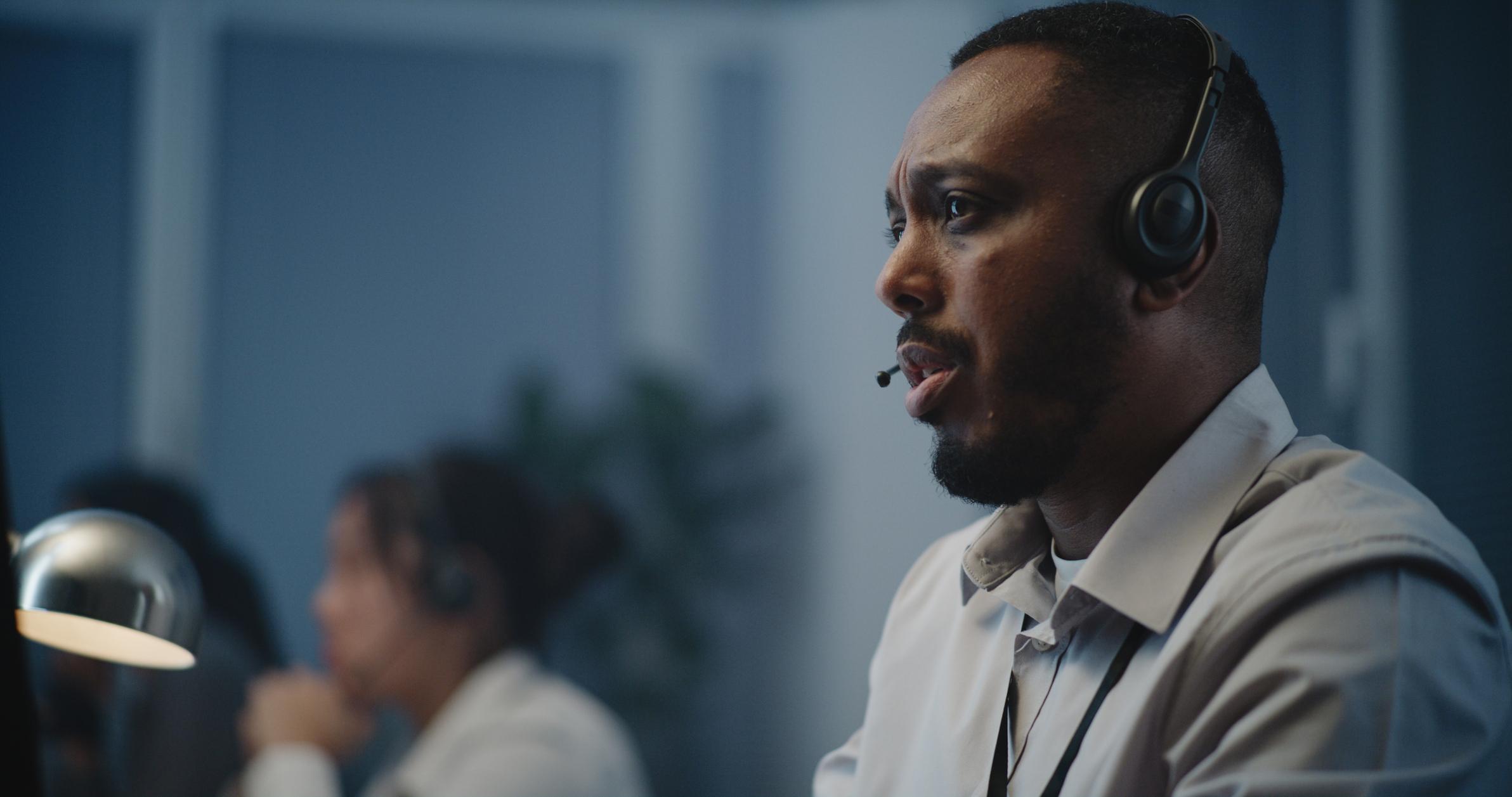
Dispatchers manage life-or-death situations every day. They handle panicked callers, make fast decisions, and keep calls moving while coordinating response in real time. That work takes skill. It also takes an emotional toll.
Over time, chronic exposure to trauma, long shifts, and high call volume can lead to mental fatigue. This isn’t just a wellness issue. It is an operational issue. NENA’s 2025 “Pulse of 911” reporting shows burnout has become the top workforce challenge, and nearly 70% of telecommunicators report stress before every shift (as well as reduced performance on the job).
That kind of strain creates a cycle many centers know too well. Burnout contributes to turnover. Turnover increases workload. Workload accelerates burnout.
PSAPs can’t solve this with grit alone. Systemic support is needed, including staffing strategies, wellness support, and modern NG911 tools that reduce friction so dispatchers can focus on the call, not the workaround.
Barrier 2: Persistent Staffing Shortages
PSAP staffing shortages remain one of the biggest industry challenges. The Pulse of 911 Report shows that 74% of ECCs still had open positions in 2025. High turnover, chronic absenteeism, and training attrition continue to keep teams stretched thin.
The same findings also revealed a 22% failure rate among new trainees, which makes restaffing even harder and delays relief for overworked employees. Many PSAPs are trying to maintain service while recruiting, training, and covering gaps simultaneously.
When staffing is thin, everyone feels it. Response times can slip. Morale drops. Retention gets harder. And the cycle continues unless agencies address their staffing strategies and the system inefficiencies weighing teams down.
Barrier 3: Outdated and Fragmented Technology
Many PSAPs are still working on legacy systems built primarily for voice calls. That creates a gap between how people communicate today (i.e. text, video, etc.) and what the center can reliably receive and act on in real time.
Meanwhile, the risk of outdated systems is growing. The 2025 Pulse Report shows that 88% of ECCs experienced some type of technology outage in the past year, which adds pressure to already stretched teams.
There is also a capability gap. According to a 2024 NENA/Carbyne survey, fewer than 27% of ECCs could communicate via text messaging, and only 24% could accept images.
That’s exactly why the FCC continues to prioritize NG911 modernization. 911 centers need to support multimedia communications, improve geospatial routing, and build more resilient systems as they move away from aging technology.
Barrier 4: Location Accuracy and Routing Delays
Seconds matter in emergency response. When dispatchers have to pause and verify where a caller is, those delays add up fast. Across millions of calls each year, shaving off even a few seconds per call can make a difference.
NG911 helps prevent delays with better location tools and faster information flow. With the built-in Caller Location Query (CLQ) in Vertex NG911, dispatchers can instantly locate a caller without switching to a separate app or service. That matters in high-stress calls, especially when the caller is disoriented, unable to speak clearly, or unfamiliar with the area.
It also improves coordination beyond the call. Dispatchers can act faster, and first responders receive more accurate location data in real time as they head to the scene. That kind of clarity helps reduce routing delays and improves emergency response from the start.
Barrier 5: Interoperability Gaps and Silos
Many 911 centers still have disconnected call handling, CAD, and RMS systems. Information gets entered in one place, then repeated in another. Teams waste time managing system inefficiencies instead of focusing on emergencies.
That disconnect creates real operational risk. Siloed workflows slow down coordination, increase the likelihood of errors (especially when it comes to manual data re-entry), and makes it harder to see the full picture as incidents evolve.
Interoperability is no longer optional. It’s a necessity for modern emergency communications. And the right NG911 solution should create a seamless connection across key systems.
When systems work together, dispatchers can move faster, responders get more consistent information, and agencies are better positioned to coordinate across jurisdictions when the call demands it.
How Vertex NG911 Helps Overcome These Barriers
The right NG911 platform should do more than replace old technology. It should reduce day-to-day pressure, improve reliability, and help dispatchers move faster with more confidence. That’s where Vertex NG911 stands out.
Its cloud-based infrastructure reduces dependence on on-premise hardware, improves redundancy, and supports continuity during outages. That matters most when ECCs are short-staffed and can’t afford downtime or server issues to hinder response.
Vertex also improves GIS-based mapping and location accuracy. Enhanced mapping tools help validate caller location faster, mitigate routing delays, and align with NG911 standards for geospatial accuracy. As one dispatcher in Edgar County put it:
“Their location is coming from their phone onto my county map, showing me where they are in the county. Now the mapping gets you right to the spot.”
— Johna Todd, 911 Dispatcher, Edgar County
Vertex NG911 supports text, image, video, and data intake, helping close the communication gap left by voice-only systems. Thanks to automation and integration, the platform reduces manual entry, streamlines call handling, and lowers cognitive load on dispatchers.
Modernization is No Longer Optional
911 centers cannot afford to wait for the next outage, staffing gap, or surge in call volume to expose their limitations. Agencies that modernize now will be better equipped to handle rising demand, support their teams, and maintain reliable service when every second counts.
That is the value of cloud-based NG911. It helps you overcome common barriers like burnout, understaffing, outdated systems, location delays, and siloed workflows. Vertex helps you by improving resiliency, mapping accuracy, interoperability, and day-to-day efficiency.
Schedule a discovery call today to learn how Vertex by CentralSquare can help your agency modernize call handling and transform emergency communications.
This website uses cookies to ensure you get the best experience on our website. By continuing on our website, you expressly consent to our use of cookies, Privacy Policy and Terms of Use. To find out more about how we use cookies, please see our Privacy Policy.